Source Heart Angel Necklace for Gifts, Parties, and Daily Wear
Explore 30 listings for the heart angel necklace featuring stainless steel and alloy options with customizable plating. Buyers can compare styles, weights, and origins from verified Chinese manufacturers to find the perfect pendant for fashion or religious use.
Key considerations
Products List





Comprehensive Sourcing Guide
Strategic Sourcing Guide for Heart Angel Necklaces
Understanding Product Attributes and Design Variations
When sourcing a heart angel necklace, buyers must first navigate the diverse landscape of product attributes that define this category. The core keyword suggests a specific aesthetic combination, yet the market data reveals a spectrum of interpretations ranging from religious symbolism to pure fashion accessories. The observed product profiles indicate that "Heart" and "Angel Wings" are frequently combined with "Cute" and "Trendy" styling cues, creating a product that appeals to a broad demographic. However, the attribute data also highlights significant variation in materials and plating, which directly impacts the final product's appearance and durability.
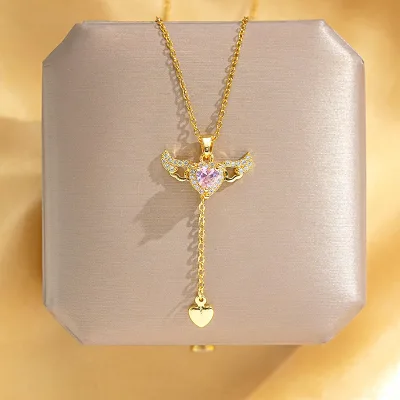
One distinct product profile identified features a "Stainless Steel" material with "Gold" plating, labeled specifically as an "Angel Wings Heart Pendant Stainless Steel Necklace" with model number KP77974-Z. This suggests a robust, corrosion-resistant option suitable for daily wear. In contrast, other listings in the same category utilize "Alloy" as the base material, often paired with "Silver" or "Copper" plating. The presence of "Alloy" and "PU" materials in related accessory profiles indicates that some suppliers may offer more cost-effective alternatives that mimic the look of precious metals but lack the longevity of stainless steel.
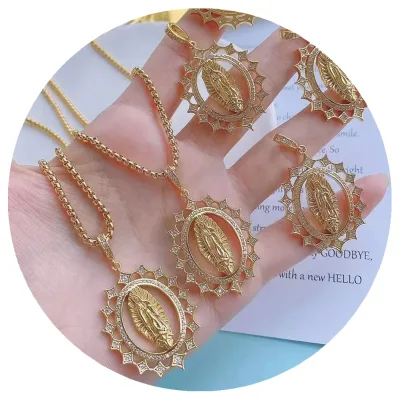
The shape and pattern attributes further complicate the selection process. While the primary request focuses on a "Heart" shape, the data shows "Other" shape patterns and "Cross" pendant shapes appearing in the same search context. This implies that suppliers often bundle related religious or symbolic jewelry items. The "Style" attributes range from "Fashion" and "Charming" to "Vintage" and "Western," suggesting that the "Angel Wings" motif is versatile enough to fit multiple design eras. Buyers must clearly define whether they require a strictly "Cute" aesthetic or a more "Sexy" and "Charming" interpretation, as these stylistic nuances dictate the supplier's design capabilities.
Technical Specifications and Material Standards
Technical due diligence is critical when evaluating heart angel necklaces, as the specifications provided in supplier catalogs often vary significantly between individual SKUs. The material composition is the primary technical differentiator. The data confirms the existence of "Stainless Steel" options, which are generally preferred for their hypoallergenic properties and resistance to tarnish. However, the presence of "Alloy" materials, sometimes described with a "Graffe Material" designation involving PU, suggests a lower-cost tier that may require additional quality checks for plating adhesion and skin sensitivity.
Weight specifications provide another layer of technical insight. Observed standards list weights ranging from 6g to 24.77g. A product weighing 24.77g, such as the model AVA1456, likely features a more substantial pendant or a thicker chain, whereas a 6g item (model AVA1457) represents a lightweight, delicate design. These weight differences are not merely aesthetic; they influence the perceived value and the structural integrity of the necklace. A heavier pendant may require a stronger chain or a specific clasp mechanism to prevent breakage, which is a key consideration for the "Closure Type" and "Fit Type" of the final product.
Chain and length specifications are equally important. The data indicates standard lengths of 40cm and 45cm, which are typical for pendant necklaces. The "Chain Type" is explicitly noted as "Necklace," but the specific construction (e.g., cable, box, or rope chain) is not detailed in the summary. Buyers should verify the chain link strength relative to the pendant weight. Furthermore, the "Plating" attributes list Gold, Silver, and Copper. The durability of these platings depends heavily on the thickness of the plating layer and the base metal quality. For instance, copper plating on an alloy base may oxidize faster than gold plating on stainless steel, necessitating clear communication regarding expected lifespan and care instructions.
Compliance, Certification, and Safety Verification
Navigating the compliance landscape for jewelry sourcing requires a rigorous approach, especially when dealing with mixed materials like stainless steel, alloy, and various platings. The provided data lists "certificate_type" as "other" and "prod_standard" as "Stainless steel" or specific weights, but it does not explicitly confirm adherence to international safety standards such as REACH, RoHS, or specific nickel-release limits. This ambiguity places the onus on the buyer to verify compliance rather than relying on catalog descriptions.
The "prod_standard" field sometimes lists weight values (e.g., 24.77g, 7g) rather than industry standards, which can be misleading. Buyers must distinguish between product weight specifications and material safety standards. For jewelry intended for children or sensitive skin, verifying that the "Alloy" or "Stainless Steel" meets specific heavy metal restrictions is essential. The "Usage" attributes mention "Health" and "Religious" applications, which can sometimes trigger additional regulatory scrutiny depending on the target market. If a supplier claims health benefits, such claims must be substantiated with valid documentation, as many jurisdictions prohibit unverified medical claims on jewelry.
Certification verification should extend beyond the product itself to the manufacturing process. The "prod_packing" varies between "Carton Box," "OPP," and "OPP Box," indicating different levels of packaging sophistication. While packaging does not directly affect product safety, it often reflects the supplier's overall quality control culture. A supplier offering "OPP" bags may be a lower-tier manufacturer compared to one providing structured "Carton Box" packaging. Buyers should request specific test reports for nickel release, lead content, and cadmium levels, particularly for items with "Copper" or "Silver" plating, as these metals can sometimes contain trace impurities if not sourced from reputable smelters.
Cost Drivers and Pricing Dynamics
The pricing of heart angel necklaces is influenced by a complex interplay of material costs, manufacturing complexity, and order volume. The observed price range of $0.90 to $18.29 USD highlights the vast disparity between entry-level fashion jewelry and higher-end pieces. The lower end of this spectrum, likely around $0.90 to $2.00, typically corresponds to "Alloy" products with thin plating and simple "OPP" packaging. These items often have higher MOQs to offset low unit margins, with observed MOQs ranging from 2 to 120 units.
Conversely, the higher price points, potentially reaching $18.29, are associated with "Stainless Steel" materials, "Gold" plating, and more elaborate packaging like "Carton Box." The cost driver here is the raw material value and the durability of the finish. Stainless steel is inherently more expensive than base alloys, and gold plating requires a more controlled electroplating process to ensure longevity. The "Customization" attribute being "Available" also adds a cost layer; bespoke designs, custom packaging, or specific model numbers like KP77974-Z may incur setup fees or higher unit costs compared to stock items.
MOQ flexibility is another significant cost factor. The data shows an MOQ range of 2 to 120, suggesting that some suppliers offer low-barrier entry for testing, while others require bulk commitments. Buyers should be aware that lower MOQs often come with a higher per-unit price. Additionally, the "Shipping Time" is noted as "Quick and Safety," which implies that expedited logistics may be a variable cost. Buyers must balance the desire for quick turnaround with the budget constraints, as rush orders can significantly impact the landed cost. The "Brand" attribute, such as "Ava," may also influence pricing if the supplier is leveraging brand equity, though this is less common in generic B2B sourcing unless specific branding rights are negotiated.
Supplier Evaluation and Operational Capabilities
Evaluating suppliers for heart angel necklaces requires a focus on their operational consistency and geographic capabilities. The data indicates origins in "China" and specifically "Yiwu Zhejiang," a region renowned for its high volume of fashion accessories and jewelry manufacturing. Yiwu is known for its efficiency in producing small, lightweight items like alloy necklaces, but buyers must verify if the supplier has the capacity to handle larger, heavier stainless steel items without compromising quality.
The "Customization" availability is a key indicator of supplier flexibility. Suppliers who offer customization can adapt to specific design requests, such as altering the "Shape" from a standard heart to a more intricate "Angel Wings" configuration or adjusting the "Plating" color. However, customization capabilities often correlate with longer lead times and stricter quality control requirements. Buyers should assess whether the supplier's "inlay_technology" is suitable for their specific design needs, noting that the data lists "other" for this attribute, which necessitates direct inquiry into their specific manufacturing processes.
Logistics and packaging are also critical evaluation points. The variation in "prod_packing" from simple "OPP" bags to "Carton Box" or "OPP Box" reflects different levels of supply chain maturity. A supplier offering robust packaging is more likely to have a structured quality control process to prevent damage during transit. Additionally, the "Shipping Time" being described as "Quick and Safety" suggests a focus on logistics reliability, but buyers should request concrete lead time estimates rather than relying on general marketing claims. The "Brand" presence, such as "Ava," indicates that some suppliers may have established distribution channels, which can be a positive sign of market acceptance and reliability.
Quality Control and Long-Term Procurement Strategy
Implementing a robust quality control (QC) strategy is essential for maintaining the integrity of heart angel necklace shipments. Given the variation in materials from "Stainless Steel" to "Alloy" and the range of plating options, a one-size-fits-all QC approach is insufficient. Buyers should establish specific inspection criteria for plating adhesion, color consistency, and structural integrity. For example, a "Copper" plated item requires different testing protocols than a "Gold" plated stainless steel piece. The "Standard" attribute, which sometimes lists weight rather than material grade, underscores the need for buyers to define their own material specifications clearly in purchase orders.
Long-term procurement considerations involve building a relationship with suppliers who can scale with demand while maintaining quality. The "Suitable for" attribute lists "Female," but the "Gender" is marked as "Unisex," indicating a broad market appeal. This versatility allows for a wider customer base, but it also means the product must appeal to diverse tastes. Buyers should consider the "Usage" attributes, which include "Decoration," "Health," and "Religious." If the product is marketed for religious use, the craftsmanship must be impeccable to respect the symbolic nature of the item.
Sustainability and ethical sourcing are increasingly important in the jewelry industry. While the data does not explicitly mention ethical certifications, buyers should inquire about the sourcing of raw materials, particularly for "Alloy" and "Plating" components. Ensuring that the supply chain is free from conflict minerals and that the manufacturing process adheres to environmental standards can be a significant differentiator in the market. Finally, buyers should plan for product lifecycle management, considering how the "Style" trends from "Vintage" to "Trendy" might evolve and ensuring the supplier can adapt designs accordingly without disrupting the supply chain.
Comparative Analysis of Product Profiles
To facilitate clearer decision-making, the following table summarizes the key differences between the observed product profiles found in the market data. This comparison highlights the trade-offs between material, cost, and specification that buyers must consider.
| Feature Profile | Material Base | Plating Type | Weight (Approx.) | Packaging | Typical Use Case |
|---|---|---|---|---|---|
| Profile A | Stainless Steel | Gold | Not specified (Standard) | Carton Box | Premium Daily Wear, Religious |
| Profile B | Alloy | Silver | 24.77g | OPP | Fashion, Trendy, Casual |
| Profile C | Alloy | Copper | 6g | OPP Box | Budget Fashion, Decoration |
| Profile D | Alloy/PU | Mixed | 7g | OPP | Waist Decoration, Accessory |
This table illustrates that while the core "Heart Angel" motif remains consistent, the underlying product architecture varies significantly. Profile A offers the highest durability and perceived value, suitable for brands positioning themselves in the premium segment. Profile B and C cater to the mass market, offering lower price points but potentially shorter lifespans due to the alloy base and thinner plating. Profile D represents a niche accessory category, blending jewelry with functional wearables. Buyers must align their procurement strategy with their target market segment, ensuring that the selected profile matches their quality expectations and price points.
In conclusion, sourcing heart angel necklaces requires a nuanced understanding of the diverse product attributes, material standards, and supplier capabilities available in the market. By rigorously evaluating technical specifications, verifying compliance, and establishing clear quality control protocols, buyers can navigate the complexities of this category and secure a reliable supply chain that meets their specific business needs.
FAQs
What materials are used for heart angel necklaces?
These necklaces are primarily made from stainless steel or alloy materials. Some listings also include PU components for specific design elements. Buyers should verify the exact material composition to ensure durability and skin safety.
Which plating options are available for these pendants?
Available plating options include gold, silver, and copper finishes. The choice of plating depends on the specific model and material base. Gold plating on stainless steel offers better corrosion resistance compared to copper on alloy.
Can I customize the design of the heart angel necklace?
Customization is available for many suppliers offering these products. Buyers can request specific shapes, plating colors, or packaging changes. However, custom orders may require higher minimum order quantities and longer lead times than stock items.
What is the typical price range for these necklaces?
The observed price range spans from 0.90 to 18.29 USD per unit. Lower prices usually correspond to alloy materials with simple packaging, while higher prices reflect stainless steel with gold plating and carton box packaging. MOQs also influence the final unit cost.
Where are these heart angel necklaces manufactured?
Most products originate from China, with specific hubs in Yiwu, Zhejiang. This region is known for efficient production of fashion accessories. Buyers should confirm the exact factory location to assess logistics and shipping times accurately.
What are the standard lengths for these necklace chains?
Standard chain lengths typically include 40cm and 45cm options. These dimensions are suitable for most pendant styles and body types. Buyers should check specific model specifications to confirm the exact chain length before placing an order.
How much does a typical heart angel necklace weigh?
Weights vary significantly based on material and design, ranging from 6g to 24.77g. Heavier items like the 24.77g model often feature more substantial pendants. Lighter options around 6g are designed for delicate, everyday wear.
What certifications do these necklaces have?
Certification types are often listed as other or unspecified in general catalogs. Buyers must request specific test reports for heavy metals like nickel, lead, and cadmium. Verifying compliance with international safety standards is essential for market entry.